
Electronic devices often require a stable and consistent voltage to operate correctly. In this experiment, you will build a simple voltage regulator circuit and observe how it maintains a steady output voltage even when the input voltage changes.
This experiment introduces the concept of voltage regulation, which is essential for powering electronic circuits safely and reliably.
Understand how a voltage regulator maintains a constant output voltage and why voltage regulation is important for electronic circuits.
The voltage regulator IC takes a higher input voltage and produces a stable lower voltage at its output.
For example, the 7805 regulator converts input voltage between about 7V–12V into a stable 5V output.
Connect the input voltage to the regulator input pin, connect ground properly, and use the regulator output to power the LED through a resistor.
The schematic below shows the electrical connections of the voltage regulator circuit.
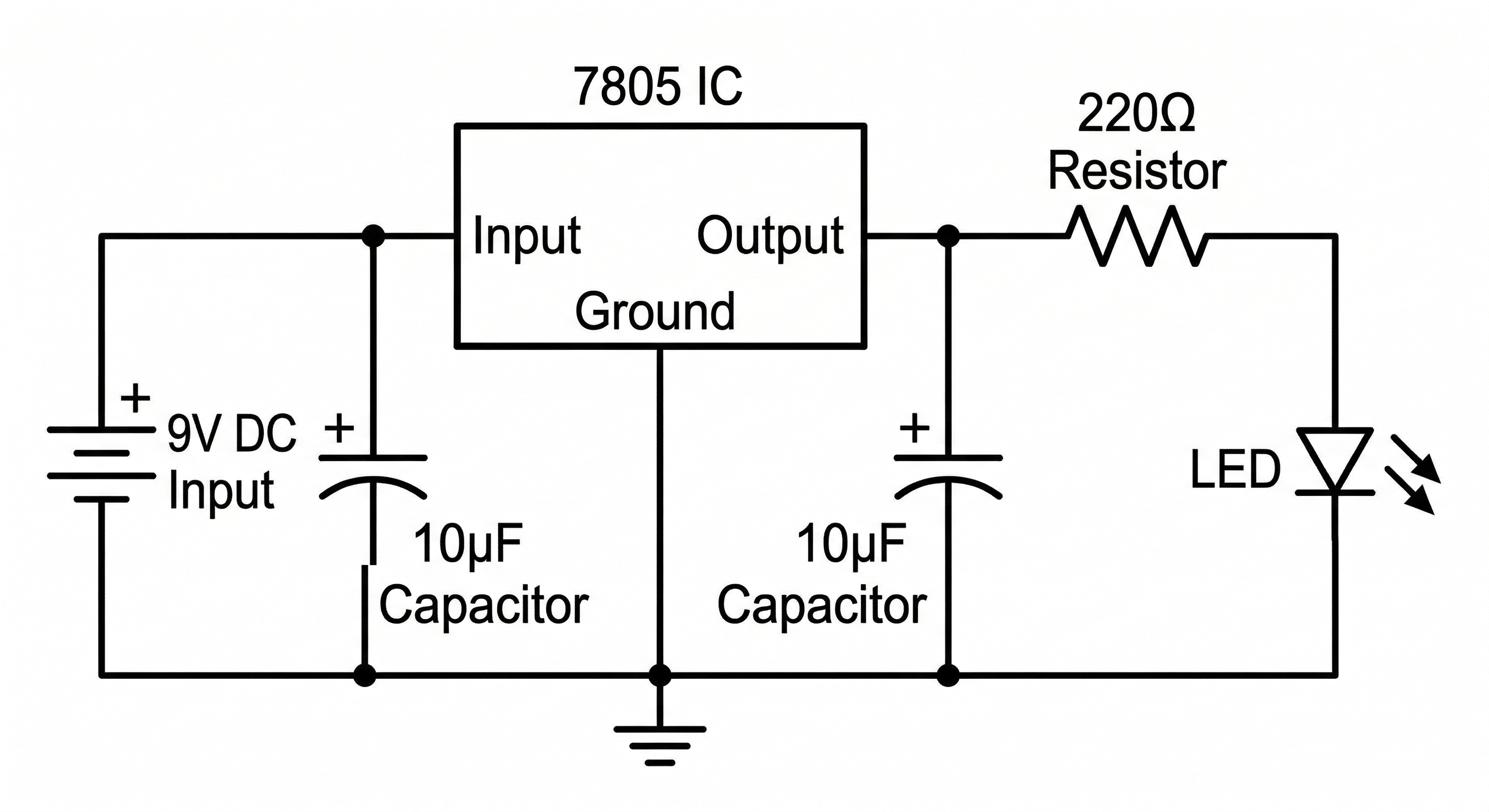
Circuit diagram showing a 7805 regulator producing a stable 5V output.
The following layout shows how the circuit can be built on a breadboard.
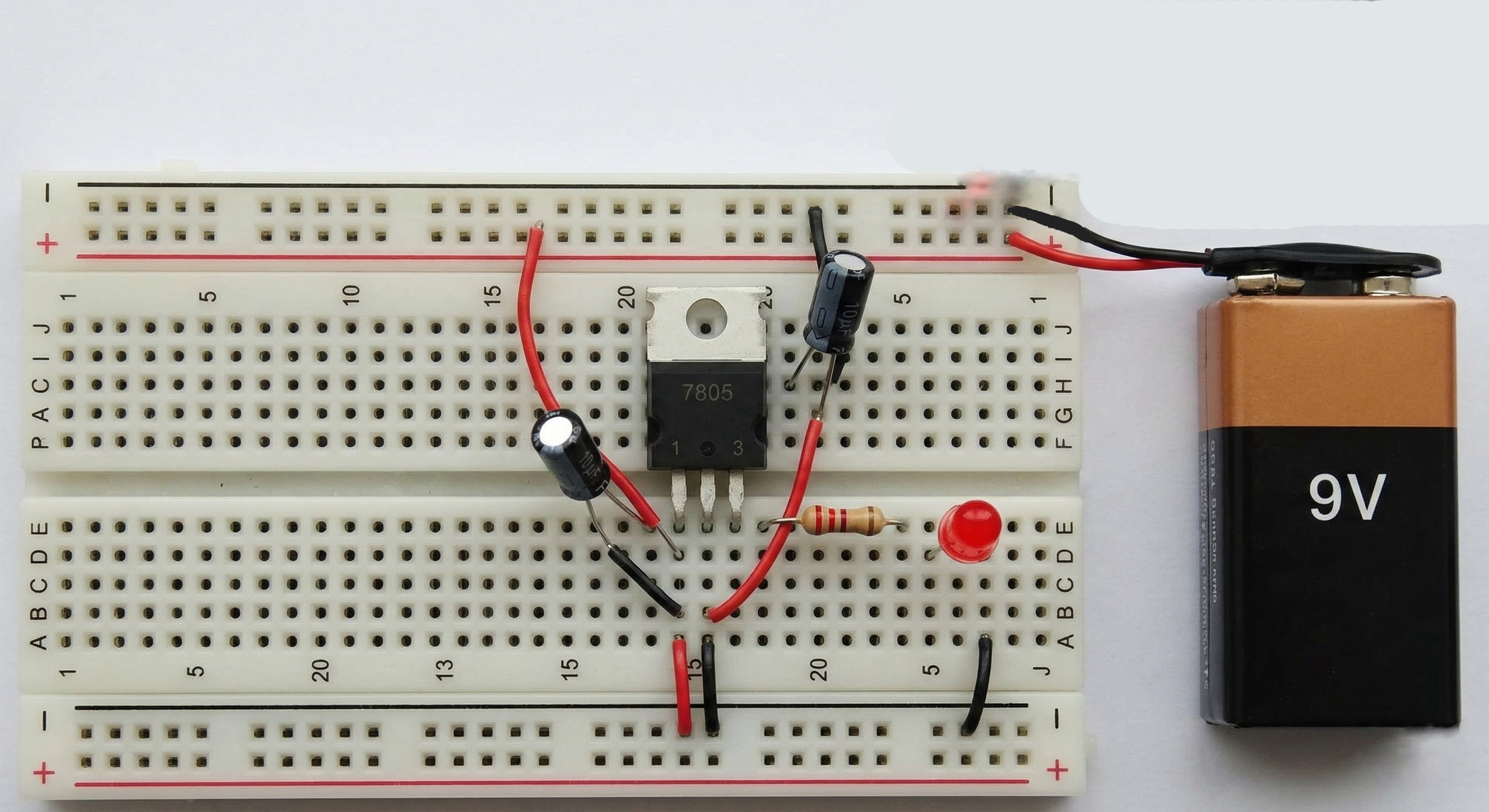
Practical breadboard wiring for the voltage regulator experiment.
The LED should remain stable in brightness even if the input voltage changes slightly.
If you measure the output using a multimeter, you should observe that the regulator maintains a steady voltage output close to its rated value.
Voltage regulators are designed to maintain a constant output voltage by internally adjusting resistance and current flow.
Even when the input voltage fluctuates within the allowed range, the regulator controls the output so that connected circuits receive stable power.
Stable voltage is important because many electronic components can malfunction or become damaged if voltage levels change too much.
Always ensure the input voltage does not exceed the regulator's maximum rating. Do not connect voltage regulators directly to mains electricity.